The holiday gift-giving time is when many retailers make a bulk of their annual profit. Several Native entrepreneurs have just opened their doors and are hopeful that this season will propel them forward, despite some indications that shoppers are cautious. Others are veterans of the business world, but are also pinning a lot of hope on the public’s ability to make the most of holiday shopping. We’ll hear from both rookies and long-time Native retailers about what it takes to start and stay in business.
Past Shows

Friday, December 12, 2025 — Persistence pays off for tribes working to remove disturbing public monuments
After years of discussions, Taos, N.M. decided to remove Kit Carson’s name from a widely used park in the center of town. Carson’s renown as a Western frontiersman grew from greatly exaggerated tales in pulp novels and newspaper articles. Only later did his violent exploits against Navajos and other tribes emerge. He was among the main figures in the Long Walk, the forced march of 10,000 captive Navajos. More than a third of them died.
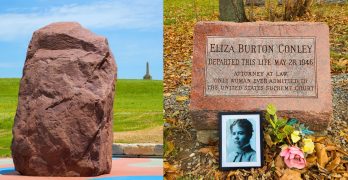
In Michigan, the U.S. Army Corps of Engineers removed a Washington Monument-style obelisk commemorating the construction of shipping locks on Lake Michigan. The obelisk sat atop the remainder of a burial ground. Lock construction destroyed the main part of the sacred area but the Bay Mills Indian Community and Sault Ste. Marie Tribe of Chippewa Indians continue to hold ceremonies there. We’ll talk with tribal advocates about their years-long work to change how their histories are viewed by the public.

Thursday, December 11, 2025 – Tribes fight for solutions to dwindling clean water sources
Paiute and Shoshone tribes in California’s Owens Valley are facing a shortage of water — an issue that spans decades, but is now exacerbated by climate change. The city of Los Angeles, more than 200 miles away, is guzzling one-third of the groundwater in the region. The city’s diversion of water from the valley began in 1913. L.A. drained Owens Lake dry within a decade. The land, once lush with springs and streams, is now a parched landscape that hinders tribes’ access to culture and economic development.
Also, we’ll hear about how a proposed weakening of federal protections for the majority of the country’s wetlands could affect tribes. Tribes manage millions of acres of wetlands. The Trump administration seeks to limit the EPA’s authority on how it regulates pollution under the Clean Water Act. Scaling back those protections has potential consequences for much of the country’s sources of clean drinking water.

Wednesday, December 10, 2025 – Mental health experts point to personal connections to maintain winter mental health
December is a traditional time for feasts, family, and giving, but the financial and time burdens of the holiday-heavy month, combined with the change of seasons and other factors, also make it a time ripe for breaks in a person’s mental health. We’ll find out how connections — with other people, cultural traditions, or spiritual foundations — can be a way to mitigate the added stresses of December — or any time.

Tuesday, December 9, 2025 – Tribes ponder blood quantum alternative
Crow leadership are working toward revamping their tribal citizenship requirements. If their proposal goes through, any currently enrolled tribal citizens would be designated as having 100% Crow blood. The St. Croix Ojibwe Tribe in Wisconsin is seeing their first tribal enrollment gains in years after they got rid of their blood quantum requirement. They are among the tribes looking down the road and mapping a future away from the Indian blood requirement.

Monday, December 8, 2025 – Tribal museums reflect on tumultuous year, chart their next steps
Cuts in grants and operating funds, federal staff reductions, and department disorganization – and the federal government shutdown – all took a toll on the work done by tribal museums this year. Tribal museums are a source of economic development for many tribes, but more than that they offer an authentic and more comprehensive picture of Native culture and history than their non-Native counterparts. As Tribal Museums Week gets underway, we’ll check in with tribal museums about their work and what they hope to accomplish in the current unpredictable environment for so many cultural institutions.

Friday, December 5, 2025 – Tribes work to define legal boundaries for online sports betting
State by state, tribes are staking out a share in the burgeoning online sports betting business. Places like Colorado, California, Wisconsin, and Michigan all have ongoing legal and political disputes involving tribes’ ability to expand casino enterprises into online sports books. We’ll look at how the clash between states, private companies, and tribes are raising complex questions over sovereignty, regulation, and jurisdiction.

Thursday, December 4, 2025 – An increasing number of workers turn to side hustles
Nine out of ten people seeking jobs say they have a side hustle — a second or even third job. An Express Employment Professionals-Harris Poll from October 2025 also says a higher percentage of younger job-seekers — Gen Z and Millennials —expect to be able to overlap their side jobs on company time. Money is a major factor – and the Bureau of Labor and Statistics reported this year that more employers are cutting hours. We’ll talk with some of those who are working multiple jobs about the ups and downs of juggling a side hustle.

Wednesday, December 3, 2025 – Tribal colleges see an uncertain federal funding road ahead
A one-time allocation for Tribal Colleges and Universities unexpectedly just doubled the federal allocation compared to the previous year. And a small handful of colleges are rejoicing over multi-million-dollar windfalls from philanthropist MacKenzie Scott. But that doesn’t mean officials at any of those institutions are breathing a sigh of relief. Instead, the unpredictable nature of federal funding and other factors — including the Trump administration’s stated plan earlier this year to all but eliminate their funding, has tribal higher education administrators scrambling. We’ll speak with some of them about the educational institutions that thousands of Native students depend on.

Tuesday, December 2, 2025 – Short films taking on big stories
“Braids” by director, writer, and editor Elise Aachix̂ Qağaduug Beers (Unangan) tells the story of a Native student who contends with bullying and uninformed school policy. It’s a modern-day tale with a long historical reach.
“Guts,” a comedy by Elias Gold (Diné), is a story of a drifter who wreaks havoc on the Navajo reservation in search of a particular traditional food.
We’ll talk with both filmmakers and also get an update on a new initiative to elevate Indigenous voices across film and TV.
Search Our Archive
NAC @ Santa Fe Indian Market

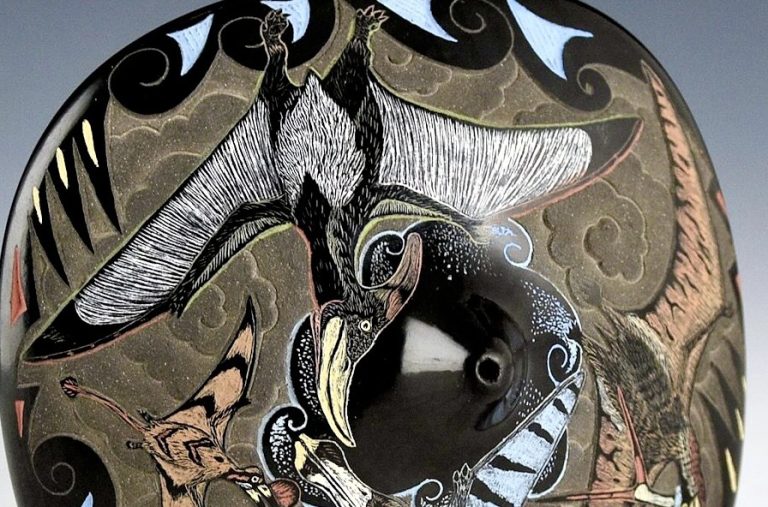
After 103 years, the Santa Fe Indian Market remains the biggest draw for Native artists, potters, and jewelry makers as well as those who appreciate and collect their work. More than 1.000 juried participants come from hundreds of Native communities, offering a hugely diverse range of inspiring work. We’ll take a small sample of that creativity and check in on the outlook for Native arts and arts education.

Distinctly Native American artwork, fashion, and films converge again for the annual Santa Fe Indian Market, with at least 1,000 booths and somewhere around 100,000 visitors. Native America Calling is live from Santa Fe, hearing from Southwestern Association for Indian Arts representatives, 2023 Best In Show winner Jennifer Tafoya, curators from the Native Cinema Showcase, and others to get a preview of the largest juried Native art market in the world.

Listen back to Native America Calling’s live broadcast from the Santa Fe Indian Market featuring host Shawn Spruce and guests Dawn Houle (Chippewa Cree from Rocky Boy Montana), Mandolin Rain Song (Taos Pueblo), Jennifer Johns (Diné), and Jason Garcia (Santa Clara Pueblo).

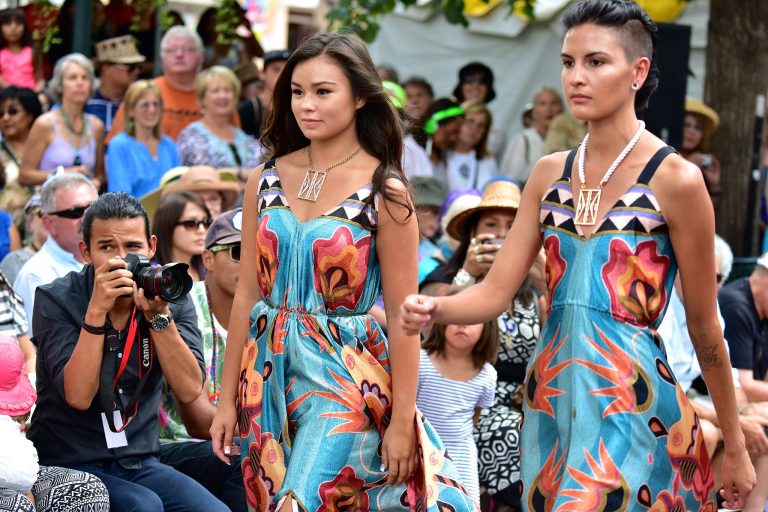
Artists from hundreds of Native nations are tending to their booths in the streets of Santa Fe, selling works they’ve labored for months to prepare. SWAIA’s Santa Fe Indian Market has come a long way in 100 years. Today on Native America Calling, Shawn Spruce is live from Indian Market for a second day with Dr. Suzanne Newman Fricke, director of Gallery Hózhó at Hotel Chaco; Dr. Robert Martin (Cherokee), Institute of American Indian Arts president, to get a feel for what’s in store for the next century; Amber Dawn Bear Robe (Siksika Nation), Indigenous Fashion Show producer for the Southwestern Association for Indian Arts and art history professor at the Institute for American Indian Arts; Dr. Jessica Metcalfe (Turtle Mountain Chippewa), owner of Beyond Buckskin; and Kristin Gentry (Choctaw), artist, photographer, writer, and curator.

It survived the Termination Era, The Depression, a World War, and, most recently, a pandemic. The Southwestern Association for Indian Arts marks the 100th Santa Fe Indian Market, a place to buy works directly from artists, to experience the creative vision of Native designers, and watch films by Indigenous filmmakers.
Today on Native America Calling, Shawn Spruce is live from the Market to get a rundown of this year’s schedule and reflect on the evolution of this major achievement of Native creativity and commerce with Cindy Benitez, program manager for the Native Cinema Showcase by the National Museum of the American Indian; film director Fritz Bitsoie (Diné);Stephine Poston (Pueblo of Sandia), board chair for the Southwestern Association for Indian Arts; and Leah Salgado (Pascua Yaqui), Chief Impact Officer for Illuminative.